

TAS National Bus Fares Survey Highlights Push away from Cash Payments
Rapid roll-out of Contactless payment and an average of 2.6% discount for purchasing an M-Ticket over a paper ticket indicate a growing trend of bus operators seeking to move passengers away from cash payments in an attempt to speed up journey times and reduce revenue collection costs. The survey also highlights operators are taking a hit with below cost and below inflation price increases on period products.
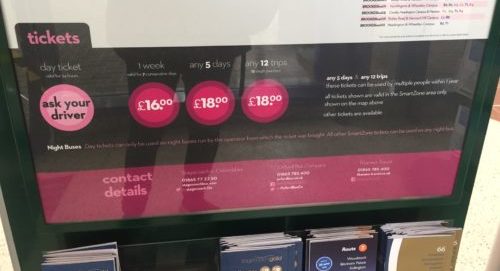
The TAS National Bus Fares Survey (NFS) 2019 analysed 1,093 sample three mile bus journeys across Great Britain excluding London. Immediate outputs showed the average three mile adult single fare to be £2.48, the average adult day ticket to be £5.21 and the average adult weekly ticket to be £18.03.
The lowest single fare for an adult traveling three miles was provided by Richards Bros in Fishguard at £0.85 which also had the lowest average single fare at £1.25. The municipal operators offered the lowest average single fare for an operating group of £2.04. The highest fare for a three mile trip was £5.00 on First Kernow in Falmouth.
First West of England’s FirstDay ticket in Weston-super-Mare was the lowest priced day ticket at £2.50 whilst Stagecoach South’s Guildford Local Megarider was the cheapest weekly ticket at £7.00. National Express’s roll-out of Low Fare Zones in the West Midlands has seen its average day ticket price reduce by 2.6%.
Contactless – the New Technology
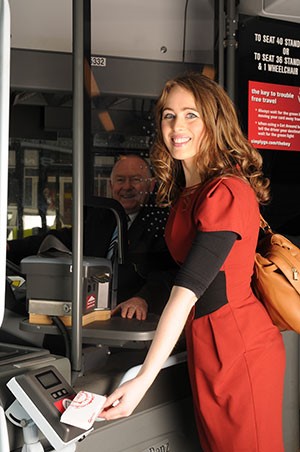
Whilst availability of Mobile Ticketing appears to have reached market saturation, with 94% of samples having an m-ticket available (compared to 92% in 2017), contactless payment availability has already overtaken it at 96% availability, a whopping increase of 66% since 2017. This is largely due to the commitment by the big groups to provide this facility and the investment by many smaller operators in new ticket machines.
Operators however are still backing m-tickets, offering on average a 2.6% discount for a weekly ticket bought via an app against those bought on bus. FirstBus offers the greatest average discount at 7%, whilst Stagecoach Merseyside and South Lancashire offers the largest individual discount at 20% on its ‘Merseyrider Plus’ ticket.
Multi-Journey Savings
The average Weekly ticket represents a saving of 27% against ten times the average single fare and a 31% saving over five day tickets. This means that even when only travelling four days a week there is a saving to be made.
The average Weekly ticket represents only 2.8% of the average weekly wage in Great Britain against the cost of owning and running a car which represents 13.3% of the Great British average weekly wage.
Whilst the average single fare has increased by 0.8% above RPI and 0.4% above industry costs since 2017, weekly tickets have increased at the rate of RPI and crucially 0.4% below industry costs. This means that operators are seeking to reward their regular passengers rather than profit from them, indeed over ten years weekly tickets have increased by an average of 3.2% below RPI. In comparison over the same period, regulated rail fares have increased by 6.6% above RPI.
Views from the Industry
TAS Senior Consultant Matthew Moll said “With data spanning ten years we are really able to get a good view of how the industry has changed over time. A persistent theme has been the low increase in multi-journey product prices but the technology for paying for and storing these tickets has constantly evolved. The range of single fares offered for the same length journey, from £0.85 to £5, show that there is a large number of factors that determine bus fares on a local level.”
CPT Chief Executive Graham Vidler said: “The survey results clearly show that despite the impact congestion is having on operators’ costs bus travel by and large remains good value for money, with the average weekly ticket still costing less outside of London than within it. Significant investment in new technology by operators now also means that almost every ticket surveyed could have been purchased using contactless payment.”
Martin Dean, Managing Director – Bus Development at the Go-Ahead Group said “The TAS National Fares Survey is a great benchmark for our industry. The 2019 report highlights how bus operators are not only seeking to reward regular travellers through attractive discounts, and are keeping weekly ticket price increases at or below inflation, as they have done for over a decade, but are also investing in customer convenience, as the dramatic increase in contactless payment acceptance detailed in the survey demonstrates.”
The full report and previous editions can be found here:
https://taspartnership.co.uk/what-we-do/national-fares-survey/
About Us
Project Showcase
Contact Us


Modern Slavery Statement© Copyright The TAS Partnership Limited 2016 The TAS Partnership Limited, Guildhall House, 59-61 Guildhall Street, Preston, Lancashire PR1 3NU | Tel: 01772 204988 A limited company registered in England and Wales Number 2929880, at the above address. Cookies on our websites: We use cookies to ensure we give you the best experience on our website. If you continue, we’ll assume that you are happy to receive all cookies on our website.
 The TAS Partnership welcomes the publication by The House of Commons Transport Select Committee (TSC) of a report commissioned from us reviewing fare concessions available on different modes of public transport in England (outside London).
 The TAS Partnership has kicked off the sixth National Fares Survey which analyses bus fares and ticketing trends and is calling for interested operators to get in touch.