
Project Showcase TAS News TAS Blogs Contact Us

National survey shines light on low cost and improved convenience of buses


  • A 90p bus to Fishguard in Wales was the cheapest three mile single fare in the UK according to the 2022 National Bus Fares survey.
  • 100% of operators sampled offered contactless payments and 98% mobile ticketing, helping people get on the bus quicker.
  • Passenger convenience has also improved with 41 out of 115 operators having a Tap-on Tap-off (TOTO) London style contactless capping fare system.
  • Flexible or carnet tickets offered a saving of up to 30%.
  • In 2022, the average adult three mile fares for:
    • a single ticket cost £2.47,
    • a day ticket, £5.29
    • and weekly ticket, £19.37

Despite rising inflationary costs for operators, the 2022 National Bus Fare survey once again confirmed that the bus remains good value for money for passengers, with the average price of a single ticket costing £2.47. The average single fare has fallen by 0.1% over the last three as a result of low fare schemes in Cornwall, West of England, Manchester, Merseyside and West Yorkshire.

The survey also highlighted that contactless payment technology, which helps beat the queues to board a bus, as well as more variety of tickets on offer, are improving the customer experience for passengers. This is following a change in people’s travelling habits since COVID.

The latest data was gathered by transport specialists, The TAS Partnership, who analysed 1,242 sample three mile bus journeys across Great Britain, excluding London, during September 2022.

The report found the lowest single fare for an adult travelling three miles was offered by Richards Bros in Fishguard, at 90p. The operator also had the lowest average single fare at £1.25.

Taking the bus in 2022 was also far cheaper than running a car, with a weekly bus ticket representing just under 3% of the weekly wage and a private vehicle, over 9% (without any form of finance or congestion charges). Stagecoach North Scotland’s Peterhead Megarider was the cheapest weekly ticket sampled at £9.60.

TAS Senior Consultant Matthew Moll, said “The bus sector continues to adapt to changes in technology, demand and political thinking.

“The last year has shown that operators have continued to absorb cost increases with average weekly ticket price increasing by only 7.5% since 2019 compared to a 19.7% increase in RPI.”

Graham Vidler, CEO of the Confederation of Passenger Transport, said: “Despite inflationary pressures operators are facing, travelling by bus remains great value for money for existing passengers and those looking to save money or change their travel habits, with the average weekly ticket costing less outside London than within it.

“Not only can people travel in comfort, but key investment made by bus companies means that now all journeys can be made using contactless payment.”  

Bill Hiron, Managing Director Stephensons of Essex and Chair of the Association of Local Bus Managers (ALBUM) said: “ALBUM is delighted to support TAS’s 2022 National Bus Fares Survey. We spend much time convincing politicians and other stakeholders of the benefits of good bus services, and it is only with accurate data that we can make our points hit home. Work such as this is invaluable in providing the ammunition we need in shaping the debate.”

37% of samples journeys covering 41 operators could be paid for via a Tap-on Tap-off (TOTO) contactless capping system. Most operators offering TOTO did not offer any discount on day and weekly travel over the purchase of a day or weekly ticket by cash. However, capping ensures that passengers pay no more than the cost of day or weekly tickets.

This contrasts with mobile ticketing with an average discount of 2% for a weekly mobile ticket compared with buying a ticket when boarding a bus. Go-Ahead offered the highest operating group discount of 8% and the highest individual product discount of 19% for Go North East’s Tyne & Wear seven days ticket.

Flexible or carnet tickets, where multiple individual tickets are purchased in bulk, have become more popular since COVID. This is a response to the perceived change in working patterns. There are no industry wide standards for product type or discount, however the most common are day tickets in bundles of five and ten, with 62% and 31% of sample journeys able to be made with these products respectively. On average, a five day carnet offered 20% discount over buying five individual day tickets, with First Bus offering the highest average discount at 25%. The ten day carnets offered on average 23% discount with Stagecoach offering an average of 30% discount over buying ten individual day tickets.Notes to Editor

  • The full report and previous editions can be found here: https://taspartnership.co.uk/what-we-do/national-fares-survey/
  • The NFS is produced by TAS every two years and was first issued in 2009, the 2021 issue was delayed due to COVID funding freezing fares.
  • The report for 2022 analyses 1,242 adult single fares across Great Britain captured in September 2022; all sample journeys selected for analysis were approximately three miles long.
  • The report includes various analyses of the fares data including by operator, market and also region, and identifies emerging trends.
  • The publicly funded low fare schemes in Cornwall, Greater Manchester, Merseyside, West of England and West Yorkshire, helped the average single fare decrease by 0.1% compared to 2019. Individually, the areas saw a reduction in average single fare of between 14% and 40%, with Cornwall seeing a 74% reduction in the average cost of a day ticket since 2019.
  • The ‘town zone’ day tickets offered by First Kernow and Go Cornwall were the lowest priced day tickets at £2.50, whilst Stagecoach North Scotland’s Peterhead Megarider was the cheapest weekly ticket at £9.60.
  • For press enquiries, please contact Matthew Moll on 01772 204988 or email fares@taspartnership.com

Pages
Home
About Us
What we do
Project Showcase
TAS News
Contact Us


Modern Slavery Statement© Copyright The TAS Partnership Limited 2016 The TAS Partnership Limited, Guildhall House, 59-61 Guildhall Street, Preston, Lancashire PR1 3NU | Tel: 01772 204988 A limited company registered in England and Wales Number 2929880, at the above address. Cookies on our websites: We use cookies to ensure we give you the best experience on our website. If you continue, we’ll assume that you are happy to receive all cookies on our website.
Project Showcase TAS News Contact Us

TAS National Bus Fares Survey Highlights Push away from Cash Payments


Rapid roll-out of Contactless payment and an average of 2.6% discount for purchasing an M-Ticket over a paper ticket indicate a growing trend of bus operators seeking to move passengers away from cash payments in an attempt to speed up journey times and reduce revenue collection costs. The survey also highlights operators are taking a hit with below cost and below inflation price increases on period products.

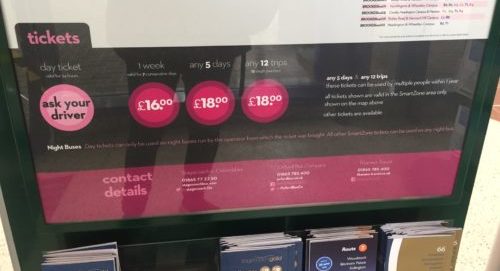
The TAS National Bus Fares Survey (NFS) 2019 analysed 1,093 sample three mile bus journeys across Great Britain excluding London. Immediate outputs showed the average three mile adult single fare to be £2.48, the average adult day ticket to be £5.21 and the average adult weekly ticket to be £18.03.

The lowest single fare for an adult traveling three miles was provided by Richards Bros in Fishguard at £0.85 which also had the lowest average single fare at £1.25. The municipal operators offered the lowest average single fare for an operating group of £2.04. The highest fare for a three mile trip was £5.00 on First Kernow in Falmouth.

First West of England’s FirstDay ticket in Weston-super-Mare was the lowest priced day ticket at £2.50 whilst Stagecoach South’s Guildford Local Megarider was the cheapest weekly ticket at £7.00. National Express’s roll-out of Low Fare Zones in the West Midlands has seen its average day ticket price reduce by 2.6%.


Contactless – the New Technology

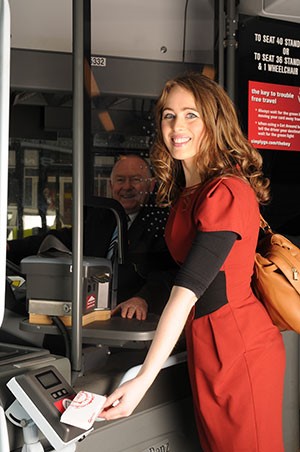
Whilst availability of Mobile Ticketing appears to have reached market saturation, with 94% of samples having an m-ticket available (compared to 92% in 2017), contactless payment availability has already overtaken it at 96% availability, a whopping increase of 66% since 2017. This is largely due to the commitment by the big groups to provide this facility and the investment by many smaller operators in new ticket machines.

Operators however are still backing m-tickets, offering on average a 2.6% discount for a weekly ticket bought via an app against those bought on bus. FirstBus offers the greatest average discount at 7%, whilst Stagecoach Merseyside and South Lancashire offers the largest individual discount at 20% on its ‘Merseyrider Plus’ ticket.


Multi-Journey Savings

The average Weekly ticket represents a saving of 27% against ten times the average single fare and a 31% saving over five day tickets. This means that even when only travelling four days a week there is a saving to be made.

The average Weekly ticket represents only 2.8% of the average weekly wage in Great Britain against the cost of owning and running a car which represents 13.3% of the Great British average weekly wage.

Whilst the average single fare has increased by 0.8% above RPI and 0.4% above industry costs since 2017, weekly tickets have increased at the rate of RPI and crucially 0.4% below industry costs. This means that operators are seeking to reward their regular passengers rather than profit from them, indeed over ten years weekly tickets have increased by an average of 3.2% below RPI. In comparison over the same period, regulated rail fares have increased by 6.6% above RPI.


Views from the Industry

TAS Senior Consultant Matthew Moll said “With data spanning ten years we are really able to get a good view of how the industry has changed over time. A persistent theme has been the low increase in multi-journey product prices but the technology for paying for and storing these tickets has constantly evolved. The range of single fares offered for the same length journey, from £0.85 to £5, show that there is a large number of factors that determine bus fares on a local level.”

CPT Chief Executive Graham Vidler said: “The survey results clearly show that despite the impact congestion is having on operators’ costs bus travel by and large remains good value for money, with the average weekly ticket still costing less outside of London than within it. Significant investment in new technology by operators now also means that almost every ticket surveyed could have been purchased using contactless payment.”

Martin Dean, Managing Director – Bus Development at the Go-Ahead Group said “The TAS National Fares Survey is a great benchmark for our industry. The 2019 report highlights how bus operators are not only seeking to reward regular travellers through attractive discounts, and are keeping weekly ticket price increases at or below inflation, as they have done for over a decade, but are also investing in customer convenience, as the dramatic increase in contactless payment acceptance detailed in the survey demonstrates.”

The full report and previous editions can be found here:

https://taspartnership.co.uk/what-we-do/national-fares-survey/


Pages
Home
About Us
What we do
Project Showcase
TAS News
Contact Us


Modern Slavery Statement© Copyright The TAS Partnership Limited 2016 The TAS Partnership Limited, Guildhall House, 59-61 Guildhall Street, Preston, Lancashire PR1 3NU | Tel: 01772 204988 A limited company registered in England and Wales Number 2929880, at the above address. Cookies on our websites: We use cookies to ensure we give you the best experience on our website. If you continue, we’ll assume that you are happy to receive all cookies on our website.

Project Showcase TAS News Contact Us

Transport Select Committee Commissions and Praises TAS Review of Concessionary Fares

The TAS Partnership welcomes the publication by The House of Commons Transport Select Committee (TSC) of a report commissioned from us reviewing fare concessions available on different modes of public transport in England (outside London).
Read the report here (pdf, 4 MB)

The research – Review of Reduced and Concessionary Fares in England Outside London was published on 31 October, 2019 and commissioned following the TSC’s Health of the Bus Market report. One conclusion of the TSC report was to look into concessionary fares as a future inquiry.

It defines a ‘concessionary fare’ as any fare reduced to below the adult level offered to particular groups of people. We primarily focused on:

  • Fares for older people and disabled people;
  • Fares for children (under 16) and young people;
  • Fares for families and groups; and
  • Travel by:
    • Bus;
    • National rail;
    • Light rail;
    • Community transport; and
    • Ferries.
  • “The main finding is one of inconsistency,” commented TAS Head of Operations Steve Warburton.

    The English National Concessionary Travel Scheme provides a statutory minimum level of free travel on local buses at specified times, yet pass availability varies widely from authority to authority in terms of time, mode and eligibility and, in particular, whether companion passes are offered to disabled passholders who cannot travel independently.

    Children and Young People, dependent upon whose bus they board, what time of day and where, must pay full adult fare at a range of ages between five and twenty-six and the percentage reduction, when offered, varies hugely. It is a myth that children universally ‘pay half fare up to age sixteen’. The vast majority of reduced fares for children and young people are commercial initiatives by the operators.

    Inconsistency prevails in the availability of tickets for families and group and the level of discount offered compared to buying separate tickets and in terms of the maximum number of people included in a ‘family’ or group. Even the nominally national ‘GroupSave’ ticket on National Rail is not offered by all train operators.

    “Enhancements to ENCTS and discretionary discount schemes for children and young people have been easy targets for councils looking at saving money” said TAS Senior Consultant, Matthew Moll, who managed the project. “This has added to the patchwork nature of discount availability,” he concluded.

    Welcoming the report, Louise Butcher, Policy Lead – Transport, for the House of Commons Library Research Service commented: “This is an useful and illuminating report showing what concessions are available, who they apply to and when and where they can be used – an invaluable resource for researchers going forwards.”

    For more information about TAS’ work on concessionary fares, click here or contact Matthew Moll on 01772 204988.

    Pages
    Home
    About Us
    What we do
    Project Showcase
    TAS News
    Contact Us


    Modern Slavery Statement© Copyright The TAS Partnership Limited 2016 The TAS Partnership Limited, Guildhall House, 59-61 Guildhall Street, Preston, Lancashire PR1 3NU | Tel: 01772 204988 A limited company registered in England and Wales Number 2929880, at the above address. Cookies on our websites: We use cookies to ensure we give you the best experience on our website. If you continue, we’ll assume that you are happy to receive all cookies on our website.

    /by

    Project Showcase TAS News Contact Us

    6th National Fares Survey on Bus Fares Kicks Off!

    The TAS Partnership has kicked off the sixth National Fares Survey which analyses bus fares and ticketing trends and is calling for interested operators to get in touch.

    The survey, which TAS began producing in 2009, is undertaken every two years and compares adult single, day and weekly tickets for most large operators in Great Britain using a sample of over 1,000 three-mile journeys. The report includes various analyses of the fares data including by operator, market and also region, and identifies emerging trends.

    TAS Senior Consultant, Matthew Moll, who is leading the project, said: “It is always a privilege to work on the National Fares Survey as it provides such a unique picture of bus fares across Great Britain. Setting changes in fare levels against inflation, changes in running costs and comparing average weekly bus fares and wages are three of the invaluable bench-marks we provide.”

    Matthew concluded: “As operators move with technology, so do we, and this year we are adding a new chapter looking at weekly mobile tickets. Many operators offer a discount for purchasing tickets via their apps rather than from the driver whilst others sell certain tickets only through their app.”

    If you are a bus operator who is not yet included in the report but would like to be, TAS would love to hear from you. Please call Matthew Moll on 01772 204988 or send him an email by mid-November.

    TAS intends to publish the report in early spring 2020. To view our previous National Fares Survey, please visit: National Fares Survey

    We also carry out numerous reviews of product and ticket sales to assist operators improve their business offer and levels of return and maximise patronage. To find out more about our fares and ticketing analysis, visit: Fares & Ticketing

    Pages
    Home
    About Us
    What we do
    Project Showcase
    TAS News
    Contact Us


    Modern Slavery Statement© Copyright The TAS Partnership Limited 2016 The TAS Partnership Limited, Guildhall House, 59-61 Guildhall Street, Preston, Lancashire PR1 3NU | Tel: 01772 204988 A limited company registered in England and Wales Number 2929880, at the above address. Cookies on our websites: We use cookies to ensure we give you the best experience on our website. If you continue, we’ll assume that you are happy to receive all cookies on our website.

    /by