-
- /
- TAS News
- /
- A better deal for bus users
A Better Deal For Bus Users
[dropcap]T[/dropcap]he DfT bus funding announced on 6th February didn’t quite match up to the many predictions stimulated by the drip feed of advance notice leaks, not least that what is offered doesn’t add up to the promised £220m, but it was close. It is, at last, an acknowledgement that some revenue funding for the bus industry is merited. All funds available apply only to England outside London.
TAS can offer project or bid development working either on an arms’ length basis or, for long-term success, in a team with local authority officers and operator managers.
 The Electric Bus Town looks very challenging as we read it that ALL scheduled services in the designated town zone will need to be zero-emission and ALL operators must sign up. It would only seem to suit an urban area / market town with a single operator of a town service network, with a limited number of interurban services coming in. It is not clear whether all school services within the zone would also be expected to be electric or hybrid. Submissions have to be made by 30 April 2020 to be awarded ‘Summer/Autumn 2020’:
- It will require significant matching investment – the fund only covers 75% of the difference in vehicle costs and 75% of infrastructure costs. However, depending upon the available electricity deal, it might well allow for quick repayment through cheaper fuel costs
- The town chosen must have an air quality problem,
- The size of fleet must fit within the £50m (or lower) budget
- Significant investment in bid development is also required
The limitations set out here seem to severely restrict the potential number of applicants. Perhaps this reflects a misunderstanding of local bus markets and how they work and that they aren’t a series of standalone islands of operations.
This is partly about technical issues (choice of infrastructure, impact on grid, agreement with power suppliers, structuring the finance and asset risks, etc.) which we can handle through our experience of working with EV operators, combined with our specialist environmental fleet associates. But more importantly it is about leverage of the concept within the chosen location(s) to gain patronage through modal shift, which will require a marketing partnership as well as political leadership where this may be associated with a CAZ with restricted or expensive access for unclean vehicles. We can call on our experience of developing bus partnerships to assist.
Apply for the all electric bus town scheme (gov.uk)
 Superbus funding is for designated urban areas with population over 75,000 and in the top 75% of deprived areas, with a submission date of no later than 30 April 2020 and awarded ‘Summer/Autumn 2020’. The focus is on bus priority infrastructure and other measures, with an associated fare cap and undertaking to increase frequencies on specified routes.
The DfT is looking for ‘big projects’ with a minimum of £10m funding.
- Each LTA can only submit one bid;
- A Superbus scheme must be delivered through an Enhanced Quality Partnership applying for five years;
- Priority will be given to high fare areas (high fare is not defined) or areas which have had above average fare increases in the last five years;
- And areas where patronage has persistently declined over the last three years;
- And where general traffic speeds have shown a persistent downward trend over three years;
- Must have firm commitment at member level and support from local bus operators;
- Areas with existing bus partnership arrangements are ‘at an advantage’;
- Must be sustainable after year five;
- The nature of the fare cap is not defined. It could be simple and not necessarily involve complex electronic fare capping;
- Must have a ‘robust monitoring and evaluation system’.
In many ways this funding is public recognition of the gospel that TAS has been preaching about congestion being the key factor that puts passengers off. Delay and unreliability are perceived as bigger turn-offs than stated frequency or fare levels; a combination of progress on all three is a pre-requisite to significant patronage growth. Given the climate change crisis, this isn’t a matter of ‘if’, it is a matter of ‘when’. Any major location that isn’t planning for at least a 25% patronage growth on its major bus corridors simply isn’t taking the issue seriously, and the politicians, planners and operators should be called out accordingly.
Success here will require a combination between a robust analysis of corridor commercial performance, scrutiny and appropriate mitigation for congestion delay points, ability to develop integrated fares offers and broad level partnership, project and business development skills. Plus the ability to tell a good story! We wrote the updated Best Practice Guidance on Bus Partnerships for the DfT three years ago – in this we worked hard to stress local authorities’ key role in ensuring that neither State Aid issues, nor the Competition & Markets Authority need to be seen as a problem, and to identify and emphasise the positive ways in which bus partners can generate trust, create added value and reinforce this by celebrating publicly.
Apply for the superbus fund (gov.uk)
 Supported Bus Services in 2020-21 This funding can only be guaranteed to be accessed if a planned and detailed commitment is submitted by 13 March! There is an alternative June submission date with funding available ‘later in the year’ but no guarantee that late bids will be fully funded. It is of note that where a shire authority is part of a combined authority then it is the combined authority which is offered this funding, rather than the local transport authority which reduced the bus budget in the first place. The funding cannot be spent on infrastructure and there is no guarantee that any such funding will appear for 2021/22.
- Options for the funding are:
- To improve current services
- To restore lost services
- To support new services or
- ‘Other’…..
- There is a somewhat bizarre requirement to consult with local MPs and show how their views have been taken into account
- It creates a dilemma for authorities which could use the funding to restore services, but as there is no guarantee that the money will be continued beyond 2021, that could create an ongoing revenue subsidy commitment or else lead to further instability – we note also:
- Funding can be tapered over a longer timescale (longer is undefined)
- It could be used on a Kickstart basis, but challenging to agree all of this by 13 March?
- Do operators have any service improvement projects ‘oven-ready’?
- Needs to be discussed with operators – what can they commit to? £0.5 – £1.5m projects
The timescale on this is ridiculously tight to agree with operators unless the focus is on reinstatement. But this doesn’t allow for identification of the mitigation activities that might have underpinned service sustainability in the first place or helped a more rational distribution of supported service funding to achieve modal shift as a priority. Working for local authorities and bus operators on network reviews is core business to us, enabling a fast response and turn round [subject to the usual qualification that informed decisions require data and lots of it]. We deploy QData to convert raw ETM data into visualised (maps / graphs / infograms) output to provide unparalleled insight into customer behaviour, which creates the baseline for performance improvement. In designing network modifications, we can balance the accessibility and environmental needs of public authorities with the resourcing and commercial requirements of operators.
Apply for supported bus services funding (gov.uk)
 The Rural Mobility Fund is in fact funding for Demand-Responsive Transport (DRT) services. Whilst the politicians clearly see this as the great hope for solving the ‘rural transport problem’, the civil servants had enough nous to extend eligibility into suburban areas due to the way ‘rural’ is defined in the Fund eligibility. As always there is faith that the latest developments in comms technology may finally be enough to help services make the breakthrough into sustainability / affordability.
- £0.5 – £1.5m projects
- Restricted to rural and suburban areas only (as defined)
- Not available if the authority has had Transforming Cities money
- Not for standard CT-type services e.g. dial-a-rides
- Reference in document to health-related journeys
- Requires some investment in bid development Each LTA can only submit one bid;
Bids must be submitted by 30 April 2020 but no award date is given. There is merit in this funding, but only through a very realistic assessment of why the vast majority of previous DRT attempts have not worked or been sustainable. In particular, identifying the right location (geography + demography + travel patterns) is key to a bid, whilst marketing is key to progress.
In contrast to many, if not most previous promoters of DRT pilots, we can at least show that a majority of the schemes we designed and/or for which we extracted funding from DfT through writing successful Rural or Urban Bus Challenge bids, are still in operation, albeit in a variety of forms. The Dengie Dart service in Essex, for example, is now 17 years old. We have close knowledge of the latest technology and how this has been applied in, for instance, Oxford PickMeUp, as well as engagement with many technology suppliers ranging from full app-based real-time many-to-many services through to more conventional aggregation systems. We have a very good track record of developing and presenting successful partnering bids to government challenge funds working to tight deadlines.
Apply for the rural mobility fund (gov.uk)
A Better Deal For Bus Users PDF (716KB)
For a very friendly discussion on whether and how we can assist you, contact:
Sarah Huntley
Managing Director
The TAS Partnership Ltd
sarah.huntley@taspartnership.com
01772 204988
PagesHome
About UsWhat we do
Project ShowcaseTAS News
Contact Us


Modern Slavery Statement© Copyright The TAS Partnership Limited 2016 The TAS Partnership Limited, Guildhall House, 59-61 Guildhall Street, Preston, Lancashire PR1 3NU | Tel: 01772 204988 A limited company registered in England and Wales Number 2929880, at the above address. Cookies on our websites: We use cookies to ensure we give you the best experience on our website. If you continue, we’ll assume that you are happy to receive all cookies on our website.


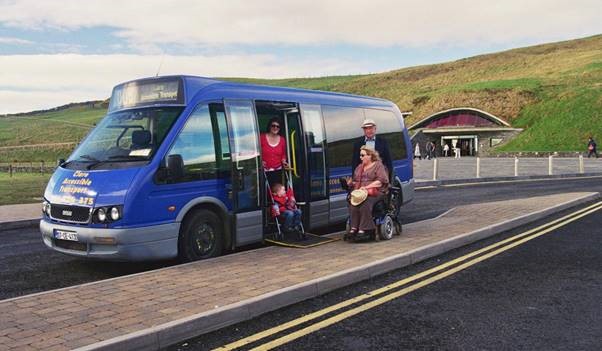 TAS is celebrating helping Galway-based Clare Bus successfully retender for services on its rural bus network.